Casuarina Equisetifolia en España: Descubre sus Beneficios y Cuidados
Casuarina equisetifolia: Uncovering the Australian Pine in Spain
The Casuarina equisetifolia, commonly known as the Australian Pine, is an evergreen tree that has found a unique niche in the Mediterranean climate of Spain. Despite its name, this tree is not a pine but rather a member of the cashew family, native to Australia and Southeast Asia. Let's delve into the fascinating world of this tree, its characteristics, uses, and its presence in Spain.
Botanical Description and Characteristics
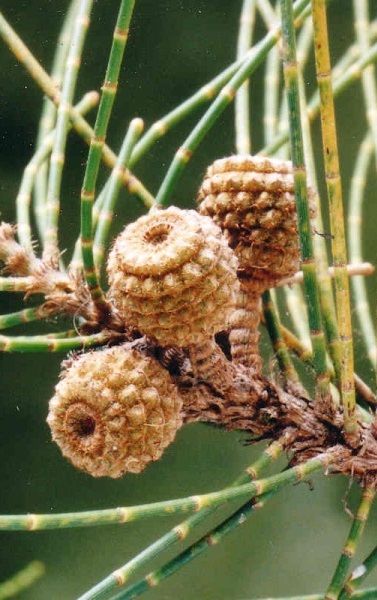
The Casuarina equisetifolia is a fast-growing, large tree that can reach heights of up to 30 meters. Its most distinctive feature is its foliage, which resembles pine needles but is actually modified leaves. These 'needles' grow in clusters at the ends of the branches, giving the tree a unique, feathery appearance. The tree also produces small, woody cones and has a straight, cylindrical trunk with smooth, grayish bark.
Adaptability and Growth
This tree is highly adaptable and can thrive in a variety of soil types, from sandy beaches to rocky outcrops. It is also tolerant of salt spray, making it an ideal candidate for coastal landscaping. In Spain, the Casuarina equisetifolia is often found in coastal regions, such as the Costa del Sol and the Balearic Islands, where it provides valuable habitat and erosion control.


Uses and Benefits
The Casuarina equisetifolia offers a multitude of benefits, both ecological and practical. Its dense canopy provides shade and shelter, making it a popular choice for urban landscaping. The tree also fixes nitrogen in the soil, improving soil fertility, and its deep root system helps to stabilize soil and prevent erosion.
Timber and Fuel
The timber of the Casuarina equisetifolia is lightweight, durable, and resistant to rot, making it valuable for construction and furniture making. In Spain, the wood is often used for fuel, as it burns hot and long. The tree also produces a valuable byproduct: its leaves can be used as mulch or compost, and its fallen branches can be used as kindling.


Medicinal and Cultural Significance
In some cultures, the Casuarina equisetifolia holds significant medicinal and cultural value. The bark, leaves, and seeds have been used in traditional medicine to treat a variety of ailments, from skin infections to respiratory problems. In Spain, the tree is often associated with coastal landscapes and is celebrated in local folklore and art.
Casuarina equisetifolia in Spain: A Success Story
The Casuarina equisetifolia was introduced to Spain in the late 19th century and has since become a naturalized species. Its success can be attributed to its adaptability, fast growth rate, and the beneficial ecosystem services it provides. Today, the tree is an integral part of Spain's coastal landscapes, providing habitat for wildlife, protecting against erosion, and enhancing the country's unique biodiversity.
Conservation and Management
Despite its success, the Casuarina equisetifolia is not without its challenges. In some areas, the tree has become invasive, outcompeting native species and altering natural habitats. In Spain, efforts are underway to manage and control the tree's spread, ensuring that it continues to provide benefits without causing ecological harm. This includes targeted planting, monitoring, and removal of invasive individuals.


Exploring Casuarina equisetifolia in Spain
If you're interested in learning more about the Casuarina equisetifolia, there are plenty of opportunities to explore this fascinating tree in Spain. From the coastal paths of the Costa del Sol to the sandy beaches of the Balearic Islands, the Australian Pine can be found in many of Spain's most beautiful landscapes. So why not take a walk, appreciate the unique beauty of this tree, and learn about its vital role in Spain's ecosystems?
| Height | Soil Type | Growth Rate |
|---|---|---|
| Up to 30 meters | Variety of soil types, including sandy beaches and rocky outcrops | Fast-growing |



Related Articles

"Arbol Tamarindo en España: Descubre sus Beneficios y Cuidados"
El árbol de tamarindo (Tamarindus indica) es una especie de árbol originaria de África, pero que se ha extendido por todo el mundo, incluyendo España. Es...

Gatos con Orejas Grandes en España: Descubre la Raza y Cuidados
¿Has oído hablar del gato con orejas grandes ? Este curioso término se refiere a una raza de gato originaria de España, conocida por sus características orejas...

Fumaria Parviflora en España: Descubre sus Propiedades y Cuidados
La Fumaria parviflora , también conocida como fumaria pequeña o fumaria de hoja pequeña, es una planta perenne que pertenece a la familia de las fumarias. Esta...

Fruto del Cedro en España: Descubre sus Beneficios y Dónde Comprarlo
Fruto del Cedro en España El Fruto del Cedro, también conocido como zizifo o ziziphus, es una fruta exótica originaria de Asia y África que ha ganado...

Piedra de Lava en España: Descubre sus Propiedades y Beneficios
¿Buscas una experiencia única y emocionante en la naturaleza? Entonces no puedes perderte la oportunidad de visitar la Piedra de Lava en España. Este fenómeno...

"Algas Microscópicas en España: Descubre la Diversidad y Beneficios"
Algas Microscópicas en España: Una Mirada a la Diversidad y su Importancia Las algas microscopicas son un grupo diverso de organismos que desempeñan un papel...